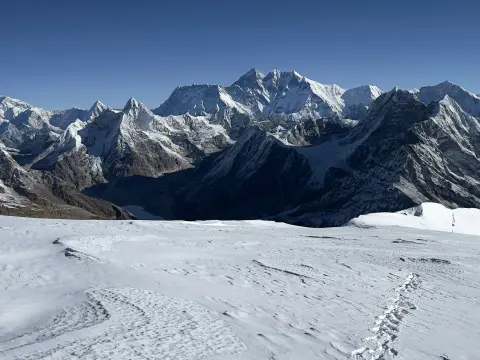
Island Peak, also known as Imja Tse, is one of the most popular trekking peaks in Nepal, standing at 6,189 meters (20,305 ft). Located in the Everest region, it offers climbers a unique blend of trekking and mountaineering, making it an ideal choice for adventure enthusiasts who want to experience high-altitude climbing without tackling the extreme technical challenges of peaks like Everest or Ama Dablam. The climb provides breathtaking panoramic views of iconic Himalayan peaks such as Lhotse, Nuptse, Ama Dablam, and Mount Everest, especially from the summit of Kala Patthar and the peak itself.
The journey begins in Kathmandu, where climbers prepare with permits, gear checks, and briefings from experienced guides at Mountain King Adventures. After flying to Lukla, the trek passes through picturesque villages, rhododendron forests, and suspension bridges before reaching the high-altitude settlements of Namche Bazaar, Tengboche, and Dingboche. The climb emphasizes acclimatization with scheduled rest days in Namche and Dingboche to reduce the risk of Altitude Sickness (AMS). The final summit push from Island Peak Base Camp requires the use of basic mountaineering equipment such as crampons, ice axes, and ropes, which Mountain King Adventures provides along with expert guidance.
Key Highlights:
The best time to climb Island Peak is during the pre-monsoon (spring) and post-monsoon (autumn) seasons. Spring, from March to May, is popular for clear skies, mild temperatures, and rhododendron blooms along the trekking trails. Autumn, from late September to early November, is considered the most stable period for weather, with crisp skies, spectacular views, and ideal climbing conditions.
Winter climbs (December to February) are technically possible but highly challenging due to extreme cold, heavy snow, and shorter daylight hours. Summer (June to August) coincides with the monsoon, making trails slippery, increasing avalanche risks, and reducing visibility. Mountain King Adventures carefully plans climbs around these optimal periods to ensure safety, acclimatization, and the best photographic opportunities. Seasonal timing also affects local festivals and trekking culture, allowing climbers to experience authentic Sherpa village life during their journey.
Seasonal Considerations:
Island Peak is classified as a moderate trekking peak, suitable for climbers with basic mountaineering skills. The trek involves gradual altitude gain, steep ascents, rocky trails, and glacier travel near the summit. While technical sections are limited, climbers must be comfortable using crampons, ice axes, and fixed ropes. Mountain King Adventures provides comprehensive pre-climb training sessions and guides each team to ensure safe movement on ice and snow.
Transportation logistics are straightforward. The journey begins with a short scenic flight from Kathmandu to Lukla (35 minutes), followed by multi-day trekking through Sagarmatha National Park. Depending on fitness levels, trekkers walk 3–7 hours per day, gradually adjusting to higher altitudes. Return trips mirror the approach, offering stunning downhill views of the mountains and villages.
Difficulty and Transportation Highlights:
During the trek and climb, accommodation is a mix of teahouses, lodges, and base camp tents. Teahouses in villages like Namche Bazaar, Tengboche, and Dingboche provide simple, clean rooms with hot water and basic amenities. In higher camps like Island Peak Base Camp, climbers stay in well-equipped tents organized by Mountain King Adventures, with dining tents and shared facilities for comfort at extreme altitudes.
Food is hearty and focused on energy and nutrition. Breakfast often includes porridge, eggs, and bread, while lunch and dinner offer dal bhat (rice and lentils), noodles, soups, and pasta. Mountain King Adventures ensures that climbers are provided with high-calorie snacks, hot drinks, and hydration throughout the climb. At high camps, meals are prepared efficiently, balancing taste with altitude nutrition needs.
Food & Accommodation Summary:
Climbing Island Peak requires several permits that are strictly regulated by the Nepalese government. These include:
Mountain King Adventures handles all permit arrangements, ensuring climbers can focus on training and acclimatization without bureaucratic stress. Permit fees contribute to park conservation and local community support, making the adventure sustainable and responsible.
Permits Checklist:
Island Peak Climbing with Mountain King Adventures is ideal for those seeking a safe, guided, and fully-supported Himalayan experience. Their experienced guides are certified mountaineers familiar with high-altitude conditions, glacier travel, and emergency protocols. The company offers personalized service, including pre-trek orientation, gear support, acclimatization guidance, and logistical arrangements for flights, accommodation, and meals.
Choosing Mountain King Adventures also means climbers gain access to local Sherpa knowledge, ensuring cultural insights and a deep connection to the Everest region. Safety is a top priority, with oxygen equipment, first aid kits, and contingency plans in place. Beyond climbing, the experience provides incredible landscapes, challenging but achievable adventure, and memories of standing atop a Himalayan peak, making it one of the most rewarding treks for adventure enthusiasts.
Reasons to Choose Mountain King Adventures:
Island Peak climbing is considered moderately challenging but does require good physical fitness. The trek involves long days of hiking at high altitudes, with some sections requiring glacier travel, use of crampons, and basic rope techniques. Cardiovascular endurance, leg strength, and stamina are crucial for a safe and enjoyable climb. Mountain King Adventures provides pre-trip fitness guidelines, acclimatization schedules, and professional support from certified guides to ensure climbers can handle both the trekking and technical aspects of the summit safely.
No previous mountaineering experience is required to climb Island Peak, though prior trekking experience and good physical conditioning are highly recommended. The route involves glacier travel and use of fixed ropes, which your guides from Mountain King Adventures will teach and supervise thoroughly. Guided instruction, acclimatization days, and support at every step ensure that beginners can safely summit, while experienced climbers can enjoy technical challenges in a supportive environment. Proper preparation and training enhance both safety and enjoyment.
Altitude sickness is a potential risk when trekking and climbing above 3,000 meters. Preparation includes gradual ascent, staying hydrated, avoiding alcohol, and following rest days as planned by Mountain King Adventures. Guides monitor all climbers for symptoms such as headaches, nausea, or dizziness, and adjust the itinerary if necessary. Optional acclimatization hikes, proper nutrition, and pacing are crucial strategies. Severe cases may require descent, oxygen, or medical attention, but with careful planning, most climbers reach the summit safely.
The full Island Peak climb, including the trek in and out of the Everest region, typically takes 18 days with Mountain King Adventures. This schedule includes travel to Lukla, gradual acclimatization days, technical training, summit day, and return to Kathmandu. Extra days are incorporated to allow flexibility in case of weather delays or individual acclimatization needs. This careful pacing ensures climbers are well-prepared physically and mentally, increasing safety and the likelihood of a successful summit.
Yes, limited communication options are available along the trek. Some tea houses and lodges offer Wi-Fi, often for a small fee, while satellite phones can be rented or provided by Mountain King Adventures for emergency use. Connectivity is more reliable in lower villages and diminishes at higher altitudes and base camps. Guides ensure that climbers stay connected in emergencies while encouraging immersion in the Himalayan environment, helping you enjoy the adventure without constant digital distractions.
The best time to climb Island Peak is during the pre-monsoon (spring) season from March to May and the post-monsoon (autumn) season from September to November. These periods offer clear skies, stable weather, and excellent mountain visibility. Spring provides blooming rhododendrons and moderate temperatures, while autumn offers crisp air and minimal rainfall. Mountain King Adventures carefully schedules climbs during these windows to maximize safety, acclimatization, and the overall trekking and climbing experience for all participants.
Safety is the top priority for Mountain King Adventures. If weather conditions become unsafe—such as heavy snow, storms, or high winds—guides will adjust the itinerary, delay summit attempts, or descend to a safer altitude. Decisions are made based on real-time weather forecasts, on-site observations, and individual acclimatization status. The team is equipped with communication devices, emergency oxygen, and evacuation plans to handle adverse conditions. Summit attempts are never forced, and climbers are supported to ensure a safe and memorable experience.
Accommodation during the Island Peak trek is typically in tea houses and lodges, which offer basic yet comfortable rooms with beds and shared or private bathrooms. At higher elevations and base camps, accommodations are simpler, often sleeping in tents or rustic lodges with shared facilities. Mountain King Adventures selects reliable, clean, and culturally immersive lodges to provide comfort while maintaining the authentic Himalayan experience. Meals are included, featuring local Nepali dishes and nutritious options to support your energy needs during trekking and climbing.
Yes, Mountain King Adventures ensures all meals are provided during the trek and climbing expedition. In tea houses and lodges, breakfast, lunch, and dinner include a mix of Nepali cuisine, hearty soups, noodles, rice dishes, and protein-rich meals to maintain energy levels. At base camps and higher elevations, food may be simpler but still nutritious, with hot drinks and snacks available. Special dietary requirements can be accommodated with advance notice to maintain climbers’ health and comfort throughout the expedition.
Climbing Island Peak requires a mix of trekking and mountaineering gear, including insulated jackets, waterproof layers, hiking boots, crampons, harness, helmet, ice axe, and gloves. Mountain King Adventures provides a detailed equipment list prior to departure and can assist with rental or purchase options in Kathmandu. Guides ensure all technical equipment is properly fitted and demonstrate safe usage. Packing appropriate clothing for cold, wind, and sun exposure is critical, as conditions at high altitude can change rapidly.
Absolutely. All climbers are accompanied by professional, certified guides and Sherpa support staff from Mountain King Adventures. Guides are trained in high-altitude mountaineering, glacier travel, and emergency response, ensuring climbers are safe at every stage. Support staff handle camp setup, meals, and logistical needs, allowing climbers to focus on trekking and climbing. The team’s experience also enhances the cultural and educational aspects of the journey, providing insight into local traditions, Himalayan wildlife, and mountaineering techniques.
Travel and trekking insurance is highly recommended and often required to participate in Island Peak climbing. Insurance should cover high-altitude trekking, helicopter evacuation, medical emergencies, and equipment loss. Mountain King Adventures advises all clients to arrange comprehensive coverage prior to departure. Having insurance provides peace of mind and ensures rapid assistance in case of accidents, altitude sickness, or unforeseen events, allowing climbers to focus fully on the adventure without worry.