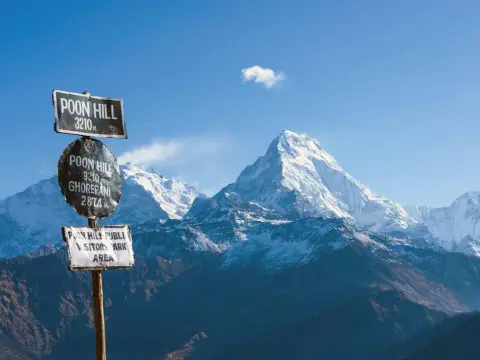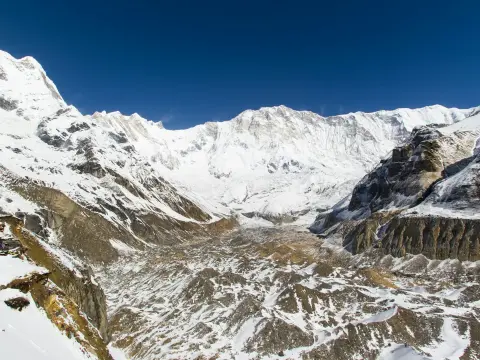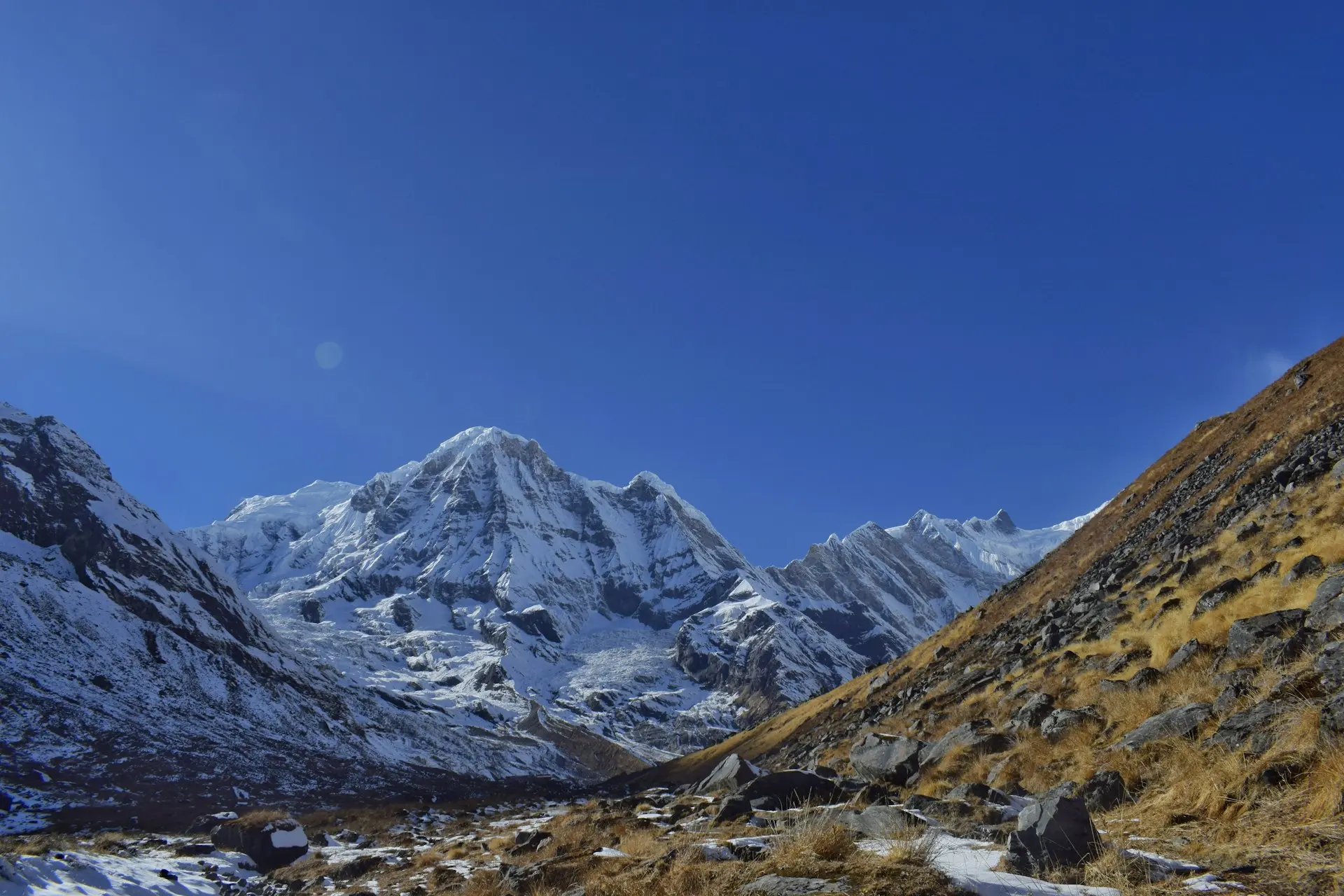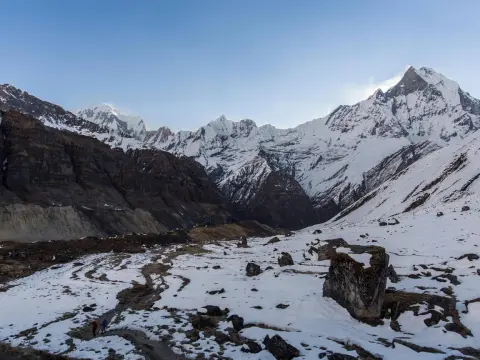
The Annapurna Base Camp (ABC) with Poon Hill Trek is one of Nepal’s most popular trekking adventures, offering a perfect combination of panoramic mountain views, cultural experiences, and natural beauty. Starting from Pokhara, this trek winds through lush subtropical forests, terraced fields, and charming Gurung villages, giving trekkers an authentic glimpse of local life. The journey passes through quaint settlements like Ulleri, Ghorepani, Tadapani, and Bamboo, eventually reaching the iconic Annapurna Base Camp (4,130 m / 13,550 ft). Along the way, trekkers also enjoy the sunrise from Poon Hill (3,210 m / 10,531 ft), offering breathtaking vistas of towering peaks such as Dhaulagiri, Annapurna South, Machhapuchhre (Fishtail), and Hiunchuli.
The trek typically spans 11–12 days, making it suitable for those seeking a moderate-duration adventure without sacrificing spectacular views. Beyond the natural beauty, this trek provides opportunities to interact with local communities, experience traditional cuisine, and stay in cozy teahouses along the trail. The ascent is gradual, allowing for proper acclimatization, which is crucial for a safe and enjoyable trek. This combination of scenic diversity, cultural richness, and well-structured itinerary makes the ABC with Poon Hill Trek an unforgettable journey for both first-time trekkers and experienced adventurers.
The best time to embark on this trek is during the pre-monsoon (March to May) and post-monsoon (September to November) seasons. During spring, rhododendron forests along the trail bloom in vibrant colors, enhancing the trek’s scenic beauty. The temperatures are moderate, and the skies are usually clear, offering unobstructed views of the Himalayan peaks. Autumn is equally spectacular, with crisp air, minimal rainfall, and stunning sunsets.
While winter (December to February) is possible, temperatures drop significantly, especially at higher altitudes, and heavy snowfall may make trails slippery. The monsoon season (June to August) brings heavy rains, landslides, and leeches in forested areas, making trekking challenging and potentially unsafe. Therefore, planning the trek during the recommended spring or autumn windows ensures maximum enjoyment, safety, and photography opportunities.
Short Points:
The ABC with Poon Hill Trek is considered a moderate-level trek. While the daily hiking ranges between 5–6 hours, the trek includes steep staircases, long ascents, and some high-altitude sections, particularly near Ghorepani, Poon Hill, and Annapurna Base Camp. Trekking experience is helpful but not mandatory, as Mountain King Adventures provides a well-structured itinerary with acclimatization days to minimize altitude-related risks. Good physical fitness, proper hiking gear, and a positive attitude are key for a successful trek.
Transportation to and from the trailhead is convenient. Most trekkers start from Pokhara, a 6–7 hour drive from Kathmandu, or optionally fly into Pokhara. From Pokhara, a drive to Birethanti marks the beginning of the trekking trail. On the return, trekkers either drive back to Pokhara or opt for a short domestic flight to Kathmandu. Mountain King Adventures ensures all logistics, including airport pickups, private vehicles, and permits, are managed for a smooth trekking experience.
Short Points:
During the trek, accommodation is primarily in teahouses and lodges, offering basic yet comfortable facilities. Rooms are generally shared, with hot showers available in higher-altitude locations at extra cost. The teahouses provide cozy resting spots, local hospitality, and an opportunity to interact with fellow trekkers. At Annapurna Base Camp, the views alone make the stay unforgettable, even in simple accommodations.
Food along the trail ranges from traditional Nepali meals such as dal bhat (rice and lentil soup), momos (dumplings), and thukpa (noodle soup) to continental options like pasta and pancakes. Tea, coffee, and local beverages are readily available. Since meals are prepared fresh, it’s recommended to carry some snacks and energy bars for long trekking days. Mountain King Adventures ensures trekkers have access to safe and hygienic food throughout the journey.
Short Points:
Trekking in the Annapurna region requires two main permits:
These permits help preserve the environment, protect wildlife, and support local communities. Mountain King Adventures handles all permit arrangements in advance, ensuring trekkers do not face any bureaucratic hassles. Additionally, guides carry copies of permits during the trek, and trekkers must always have them accessible when passing checkpoints. Proper permits are essential to avoid fines and ensure legal trekking in the Annapurna region.
Short Points:
Choosing the ABC with Poon Hill Trek with Mountain King Adventures offers a perfect blend of adventure, culture, and comfort. This trek provides panoramic Himalayan views, including Machhapuchhre, Annapurna South, Dhaulagiri, and more, with sunrise views at Poon Hill being a highlight. The itinerary is thoughtfully designed with gradual acclimatization, ensuring a safer high-altitude experience.
Mountain King Adventures provides professional guides, porters, and logistical support, making the trek hassle-free. Trekkers enjoy well-coordinated transportation, secure accommodation, and delicious meals throughout the journey. Beyond logistics, the trek immerses participants in local culture, traditions, and natural wonders, offering an enriching experience that combines adventure, relaxation, and cultural insight. Whether you are a first-time trekker or an experienced hiker, this trek promises memories that last a lifetime.
Short Points:
This trek is considered moderate to moderately challenging. The daily trekking hours range from 5 to 6 hours, with gradual ascents and descents. Although high altitude can pose some difficulty, Mountain King Adventures ensures proper acclimatization with overnight stops at key points such as Ghorepani, Deurali, and Machhapuchare Base Camp. Trekkers should have a reasonable level of fitness, enjoy walking, and be prepared for rocky or uneven trails. Our guides provide pacing tips and support to ensure everyone can enjoy the trek safely.
No prior trekking experience is required to join this trek with Mountain King Adventures, but basic fitness and stamina are essential. The trail is well-marked, and our experienced guides will assist you every step of the way. Beginners can comfortably complete the trek if they follow acclimatization advice and maintain a steady pace. For more experienced trekkers, the trail offers stunning views and cultural immersion. Proper preparation, including cardio exercises and some hiking practice, is recommended to fully enjoy the adventure.
Mountain King Adventures prioritizes safety and proper acclimatization. Altitude sickness can occur above 2,500 meters, and our itinerary is designed to gradually increase elevation, allowing your body to adjust. We recommend staying hydrated, ascending slowly, and avoiding alcohol or strenuous activity on the first day at high altitude. Guides monitor trekkers for symptoms such as headache, nausea, or fatigue and provide advice on rest, medication, or descent if necessary. Being aware, listening to your body, and pacing yourself are the best ways to prevent altitude-related issues.
Yes, the Annapurna Base Camp and Poon Hill Trek can be suitable for families with older children who have basic fitness and endurance. The trek is flexible, and Mountain King Adventures can adjust the pace to accommodate younger trekkers. Families should be mindful of altitude changes and take rest days as needed. The trek provides an excellent cultural experience and scenic adventure for children and parents alike. However, infants or very young children are not recommended due to the long trekking hours and rugged terrain.
Mountain King Adventures offers flexible itineraries, so trekkers can customize their journey to include additional rest days, side trips, or sightseeing in Pokhara and Kathmandu. Some trekkers choose to explore Ghandruk, Chhomrong, or even continue to Annapurna South Base Camp. Early planning is recommended for adjustments, especially during peak trekking seasons when lodges and permits may have limited availability. Our guides are experienced in tailoring the trek to match fitness levels, interests, and time constraints while ensuring safety and a fulfilling Himalayan experience.
The ideal time to undertake the Annapurna Base Camp and Poon Hill Trek with Mountain King Adventures is during the spring (March to May) and autumn (September to November) seasons. In spring, the rhododendrons are in full bloom, painting the trail in vibrant colors, while autumn provides clear skies, offering the best views of the Annapurna, Machhapuchare, and Dhaulagiri ranges. Monsoon (June–August) is not recommended due to heavy rainfall and slippery trails, while winter (December–February) can be very cold, especially at higher altitudes.
During the trek, accommodation is primarily in teahouses and lodges along the trail. These provide basic but comfortable rooms with twin or triple sharing, simple bedding, and shared bathrooms. Hot showers may be available in some locations for an additional cost. In Pokhara and Kathmandu, accommodation is in 3-star hotels with modern amenities. Mountain King Adventures carefully selects lodges that are clean, safe, and conveniently located, ensuring trekkers can rest and enjoy meals while surrounded by stunning Himalayan scenery.
Yes, meals are included during the trek with Mountain King Adventures. Typically, teahouses provide breakfast, lunch, and dinner. Breakfast usually includes eggs, toast, porridge, or local options, while lunch and dinner feature dal bhat (lentil rice), soups, noodles, or other Nepali dishes. In Kathmandu and Pokhara, meals may not always be included unless specified in the package. Trekkers should carry snacks, energy bars, and water during the hike, and our guides advise on safe and clean food options along the route.
Trekking in the Annapurna region requires two main permits: the Annapurna Conservation Area Permit (ACAP) and the Trekkers’ Information Management System (TIMS) card. Mountain King Adventures takes care of arranging both permits for you before the trek, ensuring a smooth start. These permits help regulate trekking, preserve the environment, and maintain safety in the region. Trekkers should carry a copy of their passport, which is required for issuing the permits. Guides also advise on rules and regulations to protect the natural and cultural environment along the trail.
Trekkers should be prepared for variable weather conditions, including sun, rain, and cold nights. Essentials include thermal layers, a warm down jacket, waterproof trekking jacket and pants, hiking boots, gloves, hat, sunglasses, and a good-quality backpack. Trekking poles can help with steep ascents and descents. Mountain King Adventures also advises carrying a reusable water bottle, snacks, headlamp, and personal first-aid items. Gear can often be rented in Pokhara, but bringing your own ensures comfort and safety throughout the trek.